Informe de análisis SİMA — Muestra
Así se ve el resultado de un análisis SİMA. Cada análisis consta de un informe escrito de ocho secciones basado en más de 160 mediciones estéticas, puntajes por sección y un plan personal de mejora sin cirugía.
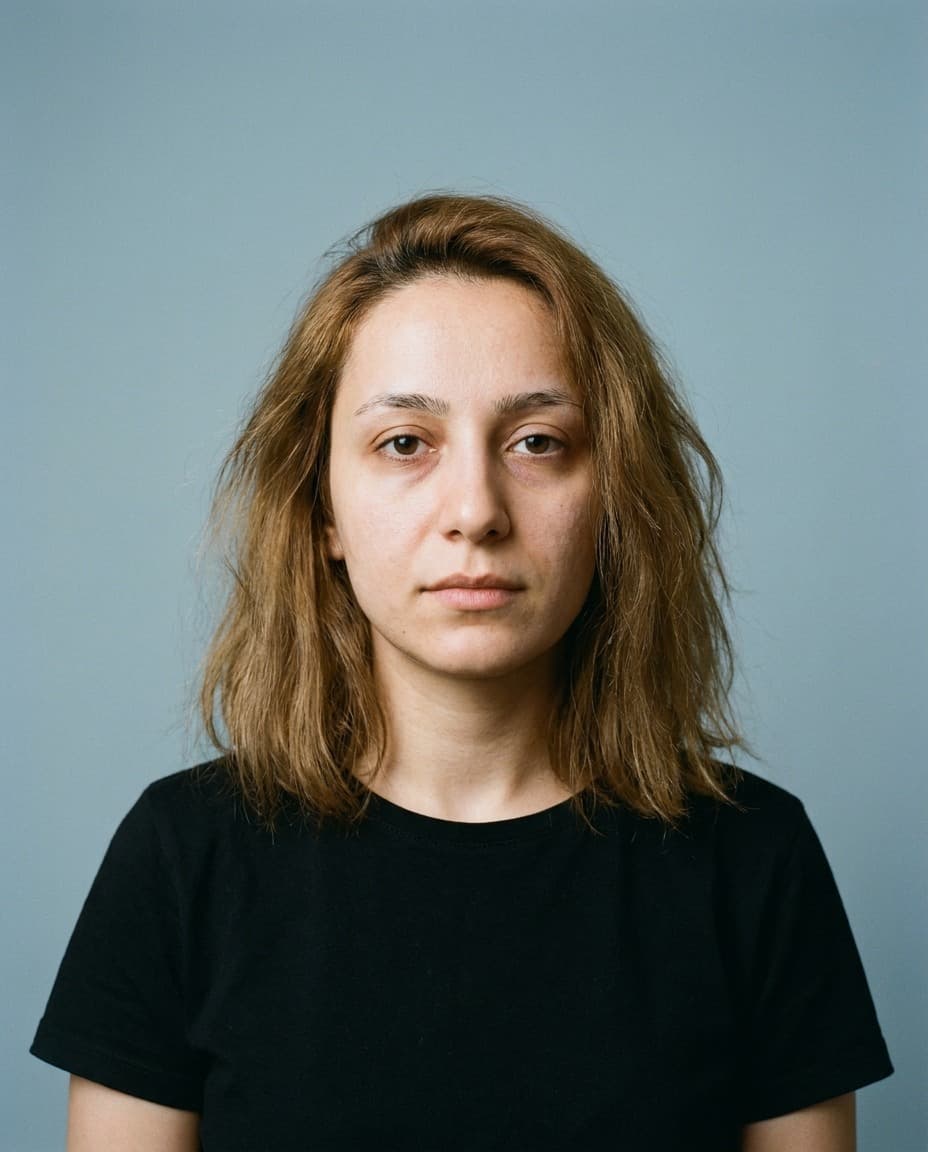
El contenido de esta página es una muestra abreviada y representativa: todas las mediciones y puntajes son sintéticos y no pertenecen a un usuario real. El texto del informe y las imágenes antes/después se generan con inteligencia artificial; las imágenes son vistas previas ilustrativas y no garantizan resultados.
Metodología
Cada análisis parte de un mapa facial de 468 puntos extraído de las fotos subidas mediante procesamiento de imagen. Las mediciones de distancia, ángulo y proporción se calculan sobre este mapa, y todos los valores se normalizan para reducir el efecto de las diferencias de luz y pose.
Los valores brutos no significan nada por sí solos: cada medición se compara con un rango de referencia emparejado por edad y grupo demográfico y se sitúa en un percentil. Los puntajes por sección se obtienen ponderando los percentiles de las mediciones de esa sección con coeficientes de importancia; el puntaje general es el promedio ponderado de los ocho puntajes por sección.
- 468 puntos — resolución del mapeo facial
- Más de 160 mediciones — distancias, ángulos, proporciones y textura
- Referencia demográfica — rangos según edad y grupo
- Promedio ponderado — de los puntajes por sección al puntaje general
¿Cómo se leen los puntajes?
- Cada puntaje está en una escala de 0 a 10; 5.0 corresponde a la mediana del grupo de referencia.
- 8.0 o más se marca como fortaleza — en esta muestra, simetría (9.1), labios (8.8), zona de los ojos (8.4) y nariz (8.2).
- Por debajo de 6.5 es un área de mejora y se vincula con al menos un punto del protocolo — en esta muestra, cejas (5.9) y piel (6.1).
- Entre 6.5 y 7.9 está la banda de referencia: se monitorea y, si resulta útil, se sugieren puntos de baja prioridad — en esta muestra, línea mandibular (6.9) y proporciones (7.8).
Puntajes por sección
El puntaje general es un promedio ponderado de los puntajes por sección frente a la referencia demográfica.
Las 8 secciones del informe
1. Evaluación general
General 7.4 · Potencial 8.1La puntuación general SİMA es 7.4/10 — aproximadamente el percentil 72 del grupo de referencia por edad y demografía; dicho de otro modo, el perfil se sitúa por delante de unas tres de cada cuatro personas del grupo de comparación. El puntaje es un promedio de los ocho puntajes por sección equilibrado por número de mediciones y peso perceptivo; ningún hallazgo fuerte o débil lo determina por sí solo.
El carácter distintivo del perfil es la brecha entre las mediciones estructurales y las de cuidado. La simetría (9.1), la estructura de los labios (8.8), la zona de los ojos (8.4) y la nariz (8.2) están en la banda de fortalezas; son en gran medida estructurales, es decir, ventajas duraderas. En cambio, las cejas (5.9) y la piel (6.1) quedan por debajo del umbral de mejora — ambas son hallazgos de cuidado, no estructurales, la categoría que responde más rápido a un protocolo sin cirugía.
El potencial alcanzable de 8.1 muestra la banda a la que las mediciones pueden llevarse de forma realista aplicando el protocolo completo: alrededor de 0.4 puntos de la ganancia provienen de la densidad de las cejas y 0.3 de los puntos de textura y tono de la piel. Las secciones estructuralmente fuertes se mantienen constantes en el cálculo; el potencial es una proyección basada en mediciones, no una promesa inflada.
Mediciones de la sección
| Medida | Valor | Referencia | Valoración |
|---|---|---|---|
| Puntaje general | 7.4 / 10 | Prom. del grupo 6.6 | Sobre el promedio |
| Percentil de referencia | Percentil 72 | Percentil 50 = mediana | Banda alta |
| Potencial alcanzable | 8.1 / 10 | — | +0.7 puntos |
| Banda de fortalezas (≥ 8.0) | 4 secciones | — | Simetría, ojos, nariz, labios |
| Áreas de mejora (< 6.5) | 2 secciones | — | Cejas, piel |
| Mediciones procesadas | 164 | ≥ 160 | Cobertura completa |
Sugerencias que esta sección aporta al protocolo
- El orden de prioridad del protocolo se deriva del análisis de contribución de esta sección: los dos primeros puntos se dedican a la densidad de las cejas y a la barrera cutánea.
- El reanálisis de la semana 8 verifica el avance hacia el puntaje potencial a través de las propias mediciones (ver Seguimiento del progreso).
2. Simetría y proporciones
Simetría 9.1 · Proporciones 7.8El índice de simetría facial es del 91 %, en la banda alta del rango de referencia (85–100). Al comparar las mitades izquierda y derecha sobre el mapa de 468 puntos, la mayor desviación local es de 1,1 mm en la línea de la cola de la ceja; las desviaciones en los ejes de ojos, nariz y boca quedan por debajo de 0,7 mm. La alineación de la línea media se desvía solo 0,6 mm — clasificada como fuerte, el valor típico de los rostros percibidos como equilibrados y ordenados a primera vista.
El puntaje de proporciones es 7.8. Los tercios verticales se distribuyen 32 / 34 / 34: el tercio inferior es un 2 % más largo que el promedio de referencia — un hallazgo que aporta carácter al perfil aunque se desvíe levemente de la plantilla ideal. En los quintos horizontales, la distancia interocular es 1,02 veces el ancho del ojo, plenamente dentro de la banda ideal. Con un fWHR de 1,86 (referencia 1,80–2,00) y una desviación compuesta de la proporción áurea del 4,8 % (umbral ≤ 8 %), el conjunto de proporciones es armonioso.
Como los hallazgos de esta sección son en gran medida estructurales, no son objetivos directos del protocolo; el valor real del puntaje es mostrar el marco en el que encajan las sugerencias de las demás secciones. Desviaciones como la longitud del tercio inferior no pueden cambiarse sin cirugía, pero sí equilibrarse perceptivamente con el encuadre del cabello y las elecciones de contorno.
Mediciones de la sección
| Medida | Valor | Referencia | Valoración |
|---|---|---|---|
| Índice de simetría | 91 % | 85–100 | Fortaleza |
| Desviación de la línea media | 0,6 mm | ≤ 1,5 mm | Fortaleza |
| Tercios verticales | 32 / 34 / 34 | ≈ 33 / 33 / 33 | Tercio inferior +2 % |
| Distancia interocular / ancho del ojo | 1,02 | 0,95–1,05 | Ideal |
| fWHR (ancho/alto) | 1,86 | 1,80–2,00 | En rango ideal |
| Desviación compuesta de la proporción áurea | 4,8 % | ≤ 8 % | Armoniosa |
| Mayor asimetría local | 1,1 mm (cola de la ceja) | ≤ 2 mm | Dentro de tolerancia |
Sugerencias que esta sección aporta al protocolo
- El punto de encuadre del cabello se eligió a partir de los hallazgos de esta sección, para equilibrar perceptivamente la longitud del tercio inferior.
- La diferencia de 1,1 mm en la cola de la ceja se marca como objetivo de simetría dentro del punto de perfilado de cejas.
3. Zona de los ojos
Puntaje de sección 8.4 / 10La inclinación cantal es de +4,2°, en el rango levemente positivo (0° – +8°) — que el canto externo quede algo por encima del interno es la configuración asociada a una mirada percibida como descansada y juvenil. Con una apertura palpebral de 9,6 mm (referencia 8–11 mm) y una distancia párpado-ceja de 19 mm, el marco ocular está equilibrado; la distancia interocular de 31,5 mm cae en la banda ideal respecto al ancho facial.
La exposición escleral inferior es de 0,4 mm — que no se vea blanco bajo el iris significa que uno de los marcadores más conocidos del aspecto cansado está ausente en este perfil. El único hallazgo de mejora de la sección es la sombra bajo los ojos: grado 2 en una escala de 5 (leve pero perceptible). El patrón de la sombra apunta a microcirculación y finura de la piel más que a un hundimiento estructural — el subtipo que responde al protocolo de cuidado.
El grado de sombra es la única razón por la que el puntaje se queda en 8.4; cuando el hallazgo baje a grado 1, la sección pasará a la mitad superior de la banda de fortalezas. Los puntos de sueño, hidratación y cuidado del contorno de ojos están vinculados a este objetivo.
Mediciones de la sección
| Medida | Valor | Referencia | Valoración |
|---|---|---|---|
| Inclinación cantal | +4,2° | 0° – +8° | Positiva |
| Apertura palpebral | 9,6 mm | 8–11 mm | Ideal |
| Distancia interocular | 31,5 mm | 28–34 mm | Ideal |
| Exposición escleral inferior | 0,4 mm | ≤ 1 mm | Favorable |
| Grado de sombra bajo los ojos | 2 / 5 | ≤ 1 | Área de mejora |
| Distancia párpado-ceja | 19 mm | 15–22 mm | Equilibrada |
Sugerencias que esta sección aporta al protocolo
- El punto de sueño e hidratación entró en el plan con el objetivo de reducir el grado de sombra de 2 a 1.
- Se añadió una rutina de contorno de ojos (fórmula con cafeína por la mañana) con un objetivo intermedio de 4-6 semanas.
4. Cejas
Puntaje de sección 5.9 / 10La densidad de las cejas está en el percentil 34 — el percentil más bajo del informe y el principal determinante del puntaje de 5.9 de la sección. La pérdida de densidad no es uniforme: la cabeza de la ceja está relativamente poblada en el percentil 46, mientras que la densidad de la cola cae al 58 % de la de la cabeza (referencia ≥ 70 %). Este patrón es un perfil de clareo más que de pérdida total — el tipo que mejor responde a la densificación tópica.
Las mediciones de forma muestran que la arquitectura es sólida: la altura del arco de 7,4 mm y el ángulo de la cola de 12° armonizan con el tipo de rostro, y la alineación cabeza-cola es de −1,1 mm, justo por debajo de la banda de referencia (0 – +2 mm). Es decir, el problema no está en la línea de la ceja sino en su densidad — el perfilado debe preservar la línea actual mientras el sérum construye densidad.
Con un protocolo de 6-8 semanas de sérum más perfilado semanal, el objetivo es acercar la densidad al percentil 50; para este perfil de muestra, la proyección a 8 semanas se calcula en el percentil 41 (ver Seguimiento del progreso). Como la densidad de las cejas también refuerza el marco ocular, la contribución de este punto al puntaje general va más allá del puntaje de la sección.
Mediciones de la sección
| Medida | Valor | Referencia | Valoración |
|---|---|---|---|
| Percentil de densidad | Percentil 34 | ≥ percentil 50 | Área de mejora |
| Relación de densidad cola/cabeza | 58 % | ≥ 70 % | Área de mejora |
| Altura del arco | 7,4 mm | 6–10 mm | Armoniosa |
| Ángulo de la cola | 12° | 10–20° | Armonioso |
| Alineación cabeza-cola | −1,1 mm | 0 – +2 mm | Levemente baja |
| Grosor en el punto medio | 8,1 mm | 7–10 mm | Equilibrado |
Sugerencias que esta sección aporta al protocolo
- El sérum densificador (mañana/noche) más el perfilado semanal se marca como punto 1 del protocolo.
- El percentil de densidad se vuelve a medir en la semana 8; la banda objetivo intermedia es ≥ percentil 41.
5. Nariz y zona media
Puntaje de sección 8.2 / 10El ángulo nasofrontal es de 134°, en el extremo superior del rango ideal (115–135°) — la transición frente-nariz dibuja una línea de perfil suave. El ángulo nasolabial de 96° (referencia 90–110°) muestra una transición equilibrada entre la base nasal y el labio superior. La proyección de la punta según el índice de Goode es 0,58 — dentro de la banda ideal de 0,55–0,60.
Las mediciones de anchura apuntan en la misma dirección: el ancho alar es 1,02 veces la distancia intercantal (ideal ≈ 1,0) y, con una desviación de rectitud del dorso de 0,3 mm, la línea del perfil se clasifica como lisa. El volumen del tercio medio está en el percentil 54 — el promedio del grupo de edad — y la proyección de los pómulos es proporcional al ancho facial.
Ninguna sugerencia de esta sección pasa directamente al protocolo; el puntaje de 8.2 figura entre las fortalezas a preservar. Los puntos de tono y luminosidad del protocolo de piel apoyan indirectamente el aspecto del tercio medio.
Mediciones de la sección
| Medida | Valor | Referencia | Valoración |
|---|---|---|---|
| Ángulo nasofrontal | 134° | 115–135° | Ideal |
| Ángulo nasolabial | 96° | 90–110° | Ideal |
| Proyección de la punta (Goode) | 0,58 | 0,55–0,60 | Ideal |
| Ancho alar / intercantal | 1,02 | 0,95–1,05 | Armonioso |
| Desviación de rectitud del dorso | 0,3 mm | ≤ 1 mm | Liso |
| Volumen del tercio medio | Percentil 54 | Percentil 40–60 | Promedio |
Sugerencias que esta sección aporta al protocolo
- Sin punto directo en el protocolo — la sección está en la lista de "preservar y monitorear"; los puntos de piel apoyan indirectamente la luminosidad del tercio medio.
6. Labios y boca
Puntaje de sección 8.8 / 10La proporción entre labio superior e inferior es 1:1,6 — coincide casi exactamente con la proporción de referencia de la literatura estética clásica. Con una longitud del filtrum de 13 mm (referencia 11–15 mm) y una definición del arco de Cupido de 4/5, el conjunto estructural de la zona labial es una de las fortalezas más consistentes del informe.
Las mediciones de superficie coinciden: la suavidad de la superficie labial está en el percentil 78, las líneas verticales son mínimas y el puntaje de barrera de hidratación labial de 7,8/10 está en la banda fuerte. La relación entre el ancho de la boca y la base nasal es de 1,48 (referencia 1,40–1,60) — el marco de la sonrisa está equilibrado con el tercio inferior del rostro.
El puntaje de 8.8 es un hallazgo a proteger: el único punto que pasa al plan es preventivo (cuidado labial con SPF). No se requiere ninguna sugerencia estructural.
Mediciones de la sección
| Medida | Valor | Referencia | Valoración |
|---|---|---|---|
| Proporción labio superior/inferior | 1 : 1,6 | 1 : 1,5 – 1 : 2 | Ideal |
| Longitud del filtrum | 13 mm | 11–15 mm | Ideal |
| Suavidad de la superficie | Percentil 78 | ≥ percentil 50 | Fortaleza |
| Ancho de la boca / base nasal | 1,48 | 1,40–1,60 | Equilibrado |
| Definición del arco de Cupido | 4 / 5 | ≥ 3 | Definido |
| Barrera de hidratación (labios) | 7,8 / 10 | ≥ 7 | Fuerte |
Sugerencias que esta sección aporta al protocolo
- Al plan solo pasó un punto preventivo: el cuidado labial con SPF, orientado a preservar la suavidad actual del percentil 78.
7. Mentón y línea mandibular
Puntaje de sección 6.9 / 10El ángulo goníaco es de 118° (referencia 110–125°) — la esquina mandibular está definida y la línea se lee con claridad. Una relación de longitud del ramus de 0,71 mantiene equilibrado el esqueleto del tercio inferior, y la definición de la línea submentoniana de 4/5 es un hallazgo fuerte para el grupo de edad.
Dos mediciones llevan el puntaje a 6.9: la proyección del mentón queda 1,5 mm por detrás del plano del perfil (referencia 0 ± 2 mm — dentro de la banda, pero en el lado negativo) y la relación de anchura del mentón es neutra, 0,96. La brecha de proyección es estructuralmente pequeña; la postura de cabeza y cuello, sin embargo, es la única variable capaz de ampliarla o reducirla — la postura de cabeza adelantada retrasa el perfil, mientras que una postura erguida adelanta el mismo mentón de forma medible.
Por eso, el punto que esta sección aporta al protocolo no es cirugía ni relleno, sino trabajo postural: con 6-8 semanas de práctica regular, la ganancia perceptiva de proyección puede medirse mediante comparación fotográfica estandarizada.
Mediciones de la sección
| Medida | Valor | Referencia | Valoración |
|---|---|---|---|
| Ángulo goníaco | 118° | 110–125° | Línea definida |
| Proyección del mentón | −1,5 mm | 0 ± 2 mm | Levemente atrás |
| Definición de la línea submentoniana | 4 / 5 | ≥ 3 | Nítida |
| Relación de longitud del ramus | 0,71 | 0,60–0,80 | Equilibrada |
| Relación de anchura del mentón | 0,96 | 0,90–1,10 | Neutra |
Sugerencias que esta sección aporta al protocolo
- El trabajo postural (alineación cabeza-cuello) entró en el plan en respuesta al hallazgo de esta sección; la ganancia se evalúa en las fotos de la semana 8.
8. Piel y edad percibida
Puntaje de sección 6.1 / 10El análisis de textura dibuja un cuadro regional: la visibilidad de los poros está en el percentil 62 en la zona T (perceptible) y en el percentil 38 en las mejillas (normal). El índice de uniformidad del tono es 84 (objetivo ≥ 90) — domina un patrón de irregularidad de origen solar. Con un puntaje de textura de 6,0/10 y un puntaje de barrera de hidratación de 5,8/10, la función barrera está en la banda media.
Tipo Fitzpatrick III: un tipo que se broncea de forma controlada pero acumula daño UV — la protección solar de amplio espectro es el punto innegociable del protocolo para este perfil. La edad percibida se estima 1,5 años por encima de la cronológica; la mayor parte de la brecha proviene de la irregularidad del tono y la rugosidad de la textura, con baja contribución de líneas y arrugas. Esa distribución es una señal favorable: el tono y la textura son los dos componentes que más rápido mejoran con el cuidado.
Con un protocolo de 8-12 semanas de barrera + vitamina C + renovación nocturna se proyecta una ganancia de +4-6 puntos en el índice de tono y de +0,5-0,8 en el puntaje de textura; el objetivo es llevar la brecha de edad percibida a la banda de ±1 año.
Mediciones de la sección
| Medida | Valor | Referencia | Valoración |
|---|---|---|---|
| Visibilidad de poros (zona T) | Percentil 62 | ≤ percentil 50 | Área de mejora |
| Visibilidad de poros (mejillas) | Percentil 38 | ≤ percentil 50 | Normal |
| Índice de uniformidad del tono | 84 | ≥ 90 | Área de mejora |
| Puntaje de textura | 6,0 / 10 | ≥ 7 | Área de mejora |
| Puntaje de barrera de hidratación | 5,8 / 10 | ≥ 7 | Área de mejora |
| Tipo Fitzpatrick | III | — | Informativo |
| Brecha de edad percibida | +1,5 años | ±1 año | Área de mejora |
Sugerencias que esta sección aporta al protocolo
- El protocolo de barrera cutánea (limpiador + vitamina C + SPF 50) se marca como punto 2 del plan.
- La rutina de renovación nocturna se añadió con el objetivo de llevar el puntaje de textura a ≥ 7; el índice de tono se vuelve a medir en la semana 8.
Plan personal de mejora (protocolo de muestra)
El informe se cierra con un protocolo sin cirugía en el que cada hallazgo se acompaña de una valoración de impacto y dificultad. Los puntos se ordenan según su contribución al puntaje general; este protocolo de muestra contiene 10 puntos:
- Rutina de densificación de cejasImpacto: Alto · Dificultad: Fácil · Duración: 6-8 semanas
Sérum densificador mañana/noche, más un perfilado semanal que preserva la línea actual. Objetivo: acercar el percentil de densidad de 34 a 50.
- Protocolo de barrera cutáneaImpacto: Alto · Dificultad: Medio · Duración: 8-12 semanas
Limpiador suave, vitamina C por la mañana y SPF 50 de amplio espectro. Se buscan +4-6 puntos en el índice de uniformidad del tono.
- Rutina de renovación nocturnaImpacto: Alto · Dificultad: Medio · Duración: 10-12 semanas
Tratamiento nocturno renovador que empieza en baja concentración y pasa de 2 noches por semana a noches alternas. Busca llevar el puntaje de textura a ≥ 7.
- Rutina de sueño e hidrataciónImpacto: Medio · Dificultad: Medio · Duración: 3-4 semanas
7+ horas de sueño y 2 L de agua al día. Vinculada al objetivo de reducir el grado de sombra bajo los ojos de 2 a 1.
- Cuidado del contorno de ojosImpacto: Medio · Dificultad: Fácil · Duración: 4-6 semanas
Crema de ojos con cafeína por la mañana, aplicada con un masaje suave. Se dirige al componente de microcirculación de la sombra.
- Trabajo posturalImpacto: Medio · Dificultad: Medio · Duración: 6-8 semanas
Ejercicios diarios de alineación cabeza-cuello y ajuste de la altura de la pantalla. Recupera la pérdida perceptiva de proyección del mentón.
- Actualización del encuadre de cabelloImpacto: Medio · Dificultad: Fácil · Duración: Una sesión
Corte y raya sugeridos según las proporciones faciales; equilibra perceptivamente la longitud del tercio inferior.
- Sugerencias de contorno e iluminaciónImpacto: Bajo · Dificultad: Fácil · Duración: El mismo día
Guía de colocación de luces y sombras según las proporciones faciales; apoya perceptivamente la proyección del mentón y el equilibrio del tercio inferior.
- Cuidado protector de labiosImpacto: Bajo · Dificultad: Fácil · Duración: Continuo
Bálsamo labial con SPF durante el día. Orientado a preservar la suavidad actual del percentil 78.
- Apoyo nutricionalImpacto: Medio · Dificultad: Medio · Duración: 8+ semanas
Énfasis en una alimentación rica en omega-3 y antioxidantes; apoya la renovación de la piel y el ciclo del vello.
Seguimiento del progreso
Al completarse el protocolo (semana 8 en esta muestra), se realiza un segundo análisis con fotos tomadas bajo el mismo estándar: las más de 160 mediciones se recalculan, cada una se compara línea por línea con el primer análisis y los puntajes se vuelven a ponderar.
El informe de cambios destaca solo las mediciones que se movieron; que las mediciones estructurales se mantengan estables es el resultado esperado y, a la vez, un control de fiabilidad de la medición. Para este perfil de muestra, la proyección a 8 semanas se ve así:
| Medida | 1.er análisis | 2.º análisis (proy.) | Duración |
|---|---|---|---|
| Densidad de cejas | Percentil 34 | Percentil 41 | 8 semanas |
| Grado de sombra bajo los ojos | 2 / 5 | 1 / 5 | 8 semanas |
| Índice de uniformidad del tono | 84 | 88 | 8 semanas |
| Puntaje de textura | 6,0 / 10 | 6,5 / 10 | 8 semanas |
Los valores de proyección son representativos; en el informe real, las filas de cambio se calculan a partir de las mediciones del segundo análisis.
La visualización antes/después del informe

Obtén tu propio informe
El informe completo incluye las 8 secciones, más de 160 mediciones, los puntajes por sección y tu plan personal de mejora.